Inputs that change intent
Consider whether manipulated requests or instructions in reference documents could redirect the service from its intended purpose.

AI Model & Service Security Testing
Examine the security boundaries of your AI service.
A solution for examining security risks that AI models and services may expose under varied inputs and usage conditions.
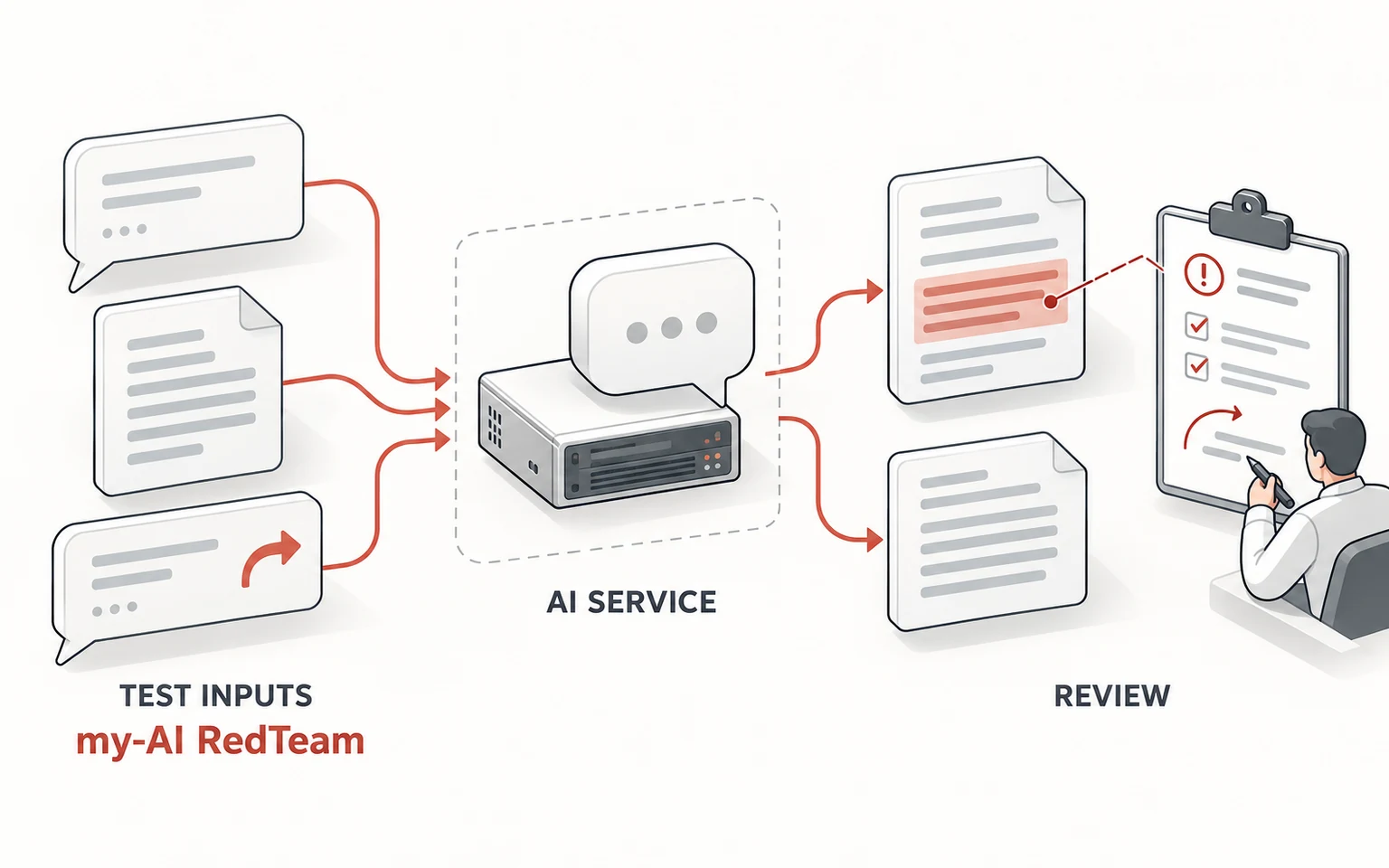 View full-size image
Review examples · scope agreed for your environment.
Consider whether manipulated requests or instructions in reference documents could redirect the service from its intended purpose.
Consider the information that may appear in responses, alongside access to connected data and services.
Review whether responses remain consistent with organizational policies and safety criteria in unexpected usage situations.
These are representative AI red-teaming perspectives, not a confirmed feature list. Applicable tests and supported scope are agreed for the target environment.
Consider whether instructions in user inputs or reference documents could redirect the service or induce unauthorized responses and actions. Prompt injection is one example of this risk.
Consider potential disclosure of personal or internal information beyond a user’s permissions. Connected data and application access controls matter alongside model responses.
Examine whether responses to prohibited or reformulated requests align with organizational operating policies and safety criteria, and identify where protective measures are needed.
Findings can inform impact assessment and remediation priorities. Rechecking the same conditions after changes to policies, permissions or input and output handling helps assess improvement.
Review the intended use and environment of the AI model or service you want to examine.
Discuss relevant review items, access conditions and the scope that can be supported.
Agree how to document risk conditions and improvement directions, and how to use them for follow-up review.
Discuss applicable review items and support scope for your environment and intended use.